

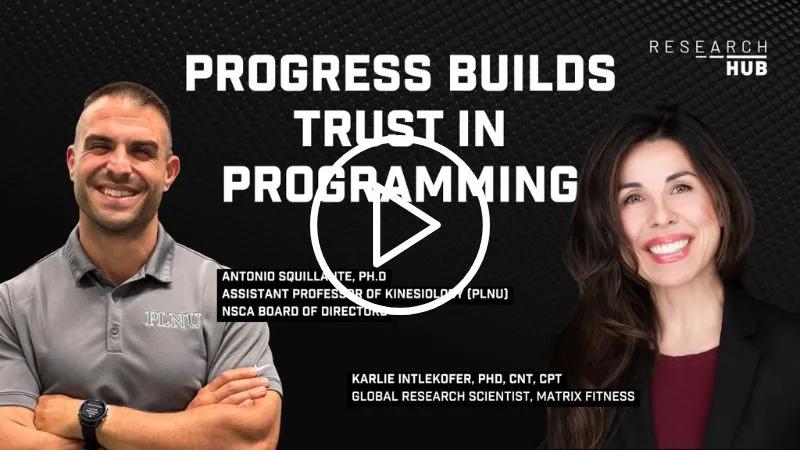
Programming Strength Progression with Antonio Squillante


Listen on 

Strength training keeps gaining interest across gyms, yet many members stop seeing results after the early phase. Many programs focus on single sessions instead of how training unfolds over time. Progress depends on structure built across weeks and months. That structure guides whether members or athletes adapt or stall.
On the Research Hub podcast, Dr. Karlie Intlekofer spoke with strength and conditioning expert and Assistant Professor of Kinesiology, Antonio Squillante about how muscles respond to training and how coaches can guide better outcomes on the gym floor.
Different goals lead to different results
Strength training leads to different adaptations based on how it is applied. Muscle size, max strength and movement speed respond to different loading and effort. These outcomes connect, but each one benefits from a clear focus.
Heavier loads with lower reps support max strength. Moderate loads moved with intent support faster movement. Higher reps taken close to fatigue support muscle growth. When goals stay clear, programs feel more focused and progress is easier to track.
Progress requires planned change
Many members train often and follow the same plan for months. Loads, reps and pace stay the same. The body adapts and progress slows.
Progress comes from planned change. Shifts in load, reps, tempo or effort create new stimulus. Coaches guide this process by watching movement quality, reading fatigue and adjusting sessions based on what shows up that day.
This feedback loop keeps training aligned with the person rather than locked into a preset plan.
The role of controlled lowering
Muscles shorten, lengthen and hold position under load. Training the lengthening phase supports joint control and tissue strength.
Slower lowering with manageable loads fits well for general fitness and movement skill. Heavier lowering supports higher force tolerance for advanced lifters under close supervision. Most members benefit from slow tempo lifts, pauses and basic landing drills.
This approach supports safer movement during sport and daily tasks like stairs, direction changes and catching balance.
Strength, speed and long-term engagement
Higher strength raises capacity and helps joints and tissue handle load. Faster movement supports daily actions and recreational sports.
Programs work best when both appear across the week. This mix keeps training productive and reduces burnout.
Motivation builds up when progress is visible. Short-term goals give sessions direction. Coaches who track change and reflect it back help members stay engaged through harder phases of training.
Coaching happens in the room. Observation, communication and adjustment build outcomes that help members and athletes keep training and moving well.
Subscribe now to Research Hub podcast for more expert insights and practical advice on fitness and training.

