

Sprint Intensity and Performance Training with Doug Lawson and Steve Barrett


Listen on 

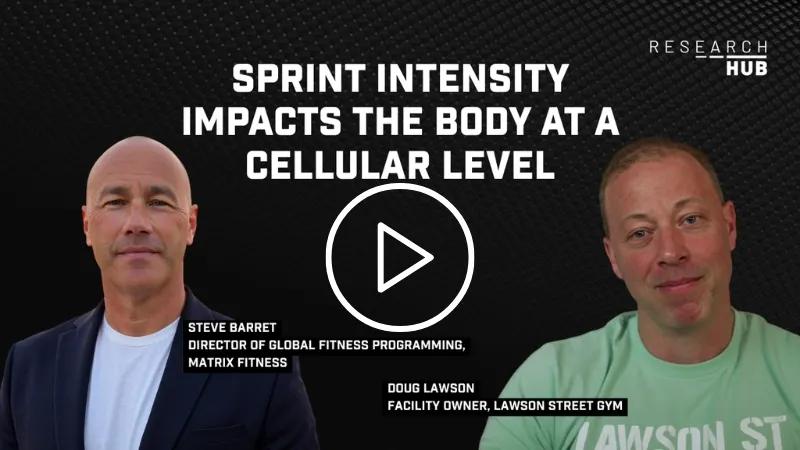
Featuring Steve Barrett, Global Director of Fitness Programming at Matrix Fitness, and Douglas Lawson, performance coach and facility owner
High-intensity training is often measured by heart rate. Sprint intensity looks deeper. It challenges the body at a muscular and cellular level, engaging fast-twitch fibers responsible for speed and explosive strength. This shift in focus changes how performance is built and sustained over time.
Steve Barrett explains that this method influences more than performance metrics. It builds a stronger foundation for long-term growth and recovery. Working at full capacity for short bursts triggers adaptations that lead to measurable improvement in both physical and mental performance.
What Sprint Intensity Is
Sprint intensity combines short, all-out effort with complete recovery. The aim is to recruit fast-twitch fibers that often stay inactive during moderate exercise. This process drives gains in strength, speed and endurance.
It’s demanding but adaptable, structured yet inclusive. Douglas Lawson calls it “a system that rewards commitment, not complexity.” The consistency of the method helps athletes at every level improve performance and maintain focus.
The Science Behind the Sprint
Research indicates sprint intensity naturally boosts growth hormone and testosterone and stimulates brain-derived neurotrophic factor (BDNF), which supports cognitive health. Athletes often notice sharper focus, faster recovery and sustained energy after consistent sessions.
Lawson’s coaching experience reflects these results. His athletes often perform their best strength work following sprint intensity sessions. The body becomes primed to perform, supported by the chemistry it produces under true effort.
A Method That Fits Every Athlete
Sprint intensity adapts to any fitness level and environment. It can be applied on a track, treadmill, bike or elliptical, giving coaches and facilities a scalable, evidence-based model for better member outcomes.
Barrett summarizes it clearly: sprint intensity complements every type of training and conflicts with none. It supports strength, endurance and conditioning in equal measure.
Listen to the Full Conversation
Hear Steve Barrett and Douglas Lawson discuss the science and coaching behind sprint intensity training on the Research Hub Podcast.
