

PACE - Connected Fitness Ecosystem: How AI powers Personalized Training


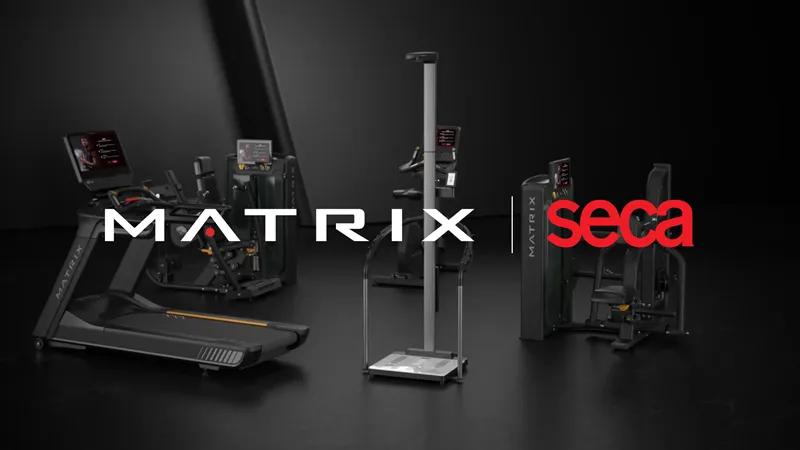
A connected fitness ecosystem is essential for delivering true personalization in modern gyms. By combining AI, real-time data, and smart equipment, platforms like PACE — the Personalized Adaptive Coaching Experience, developed by Matrix in partnership with seca — are transforming how workouts are designed and delivered.
When Matrix began exploring the future of personalized training, the team quickly realized that AI alone couldn’t solve the industry’s biggest challenges.
As Senior Digital Product Manager – Global, Matt McConley explains, “We didn’t want to build another digital feature. The goal was to create a complete ecosystem where real data, real equipment and real training environments all work together to deliver meaningful personalization.”
Through this integrated approach, PACE shows how the next generation of fitness technology will move beyond isolated devices or software to create a unified training experience across the entire facility.
HOW DATA DRIVES PERSONALIZED FITNESS PROGRAMS
Truly personalized fitness begins with accurate data. However, for most fitness facility members exercise decisions are often based on guesswork rather than meaningful insight. Many people don’t know how much weight to use, which equipment to prioritize or how long they should train to reach their goals.
To address this gap, Matrix partnered with seca, a company with more than 185 years of expertise in medical-grade measurement and analysis. seca's body composition analysis provides clinically validated data in seconds, creating a detailed physiological profile for each user. Because machine learning models rely heavily on the quality of their inputs, this level of precision provides a far more reliable foundation than traditional fitness-grade estimates.
By combining seca’s medical-grade measurements with Matrix training technology, PACE converts physiological insight into practical exercise guidance. This approach quickly proves that when reliable data meets intelligent programming, personalization becomes both credible and actionable.

BUILDING A CONNECTED FITNESS ECOSYSTEM
Turning body composition insights into real workouts required more than simply building an AI model. The development team needed to design an entire ecosystem in which multiple technologies could operate independently while still contributing to a seamless user experience.
PACE connects several critical elements across the facility environment. The seca TRU, a body composition analyzer, captures physiological data, while Matrix cardio and strength touchscreen consoles deliver personalized programming directly through the equipment members already use. Member identification systems connect individual profiles to workouts, and the proprietary Matrix AI translates incoming data into goal-based training plans.
To make this system reliable, engineers first developed each component individually before integrating them into a unified workflow. This modular approach ensured that every piece worked correctly on its own before being connected to the larger ecosystem.
The resulting architecture reflects the core purpose of PACE, making personalization truly powerful when the entire training environment works together to support it.
HOW AI ADAPTS TO REAL GYM ENVIRONMENTS
Even the most sophisticated AI training models must ultimately work in real fitness facilities, where shared equipment, busy schedules and unpredictable traffic patterns shape how members actually exercise.
During development, research revealed that exercisers often spend as much as twenty minutes of a typical hour-long workout moving between stations or waiting for equipment. Early programming models that looked efficient on paper sometimes took far more time in real training environments.
To address this challenge, the AI development team incorporated operational insights into the system’s logic. They refined the platform to account for equipment availability, facility layouts and realistic workout durations. They retrained the model so that recommended workouts fit the time members actually have available rather than idealized training conditions.
These refinements ensured that PACE reflects the realities of modern fitness facilities. In doing so, the platform reinforces its foundational promise that personalized training must work in real environments, not just theoretical ones.
STREAMLINING GYM ONBOARDING WITH AI
Another critical challenge was onboarding. Many fitness facility members feel overwhelmed during their first visit, unsure how to begin or which equipment to use.
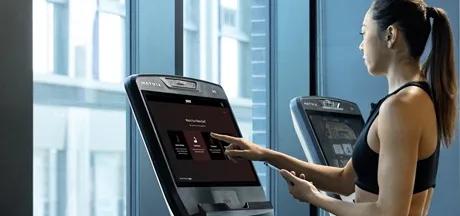
PACE leaps over this barrier with an onboarding experience designed to deliver meaningful guidance within minutes. To get started, exercisers will complete their body composition measurement and a three-question survey capturing their goals, training frequency and preferred workout duration.
Using this information, the system immediately generates a personalized workout delivered through Matrix touchscreen consoles. The first workout simultaneously functions as an assessment, establishing baseline strength benchmarks for key muscle groups. These benchmarks allow the system to estimate appropriate resistance levels for other exercises without requiring lengthy testing sessions.
By simplifying onboarding, PACE makes personalized training more approachable from the very first workout. This streamlined entry point removes confusion so members can focus on progress.
THE FUTURE OF CONNECTED FITNESS ECOSYSTEMS
From the beginning, PACE was designed as a foundation rather than a finished product. Its architecture allows the ecosystem to grow as new data sources, technologies and health priorities emerge.
Future integrations may include other data sources and measurements which will further refine workout recommendations while supporting broader health initiatives such as preventative care and long-term wellness programs.
The platform also opens new possibilities for trainers and facility operators. AI-generated baseline programming can reduce administrative workloads, allowing trainers to spend more time building relationships and delivering high-quality coaching rather than creating workouts from scratch.
As McConley reflects, “What makes PACE powerful isn’t just the technology itself. It’s the ecosystem we’ve built around it. When accurate health data, intelligent equipment and expert programming all connect, facilities can deliver a level of personalization that simply wasn’t possible before.”
By bringing measurement, equipment and adaptive programming together into a unified system, PACE demonstrates how a connected fitness ecosystem can transform the training floor. For members, trainers and facility operators alike, it turns complex data into confident action. More importantly, it transforms personalized fitness from an aspiration into a reality.
